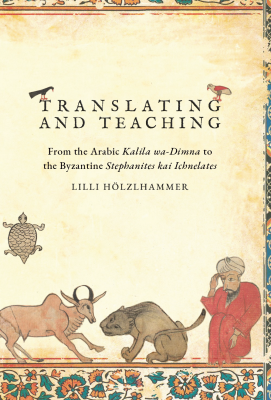
Translating and Teaching: From the Arabic Kalila wa-Dimna to the Byzantine Stephanites kai Ichnelates
Keywords:
Kalila wa-Dimna, Stephanites kai Ichnelates, Arabo-Greek literature, translation, didactics, textual transmission, fables, narratology, ethicsSynopsis
In the late eleventh century, Symeon Seth – a Byzantine scholar originally from Antioch – produced a translation of the highly popular Arabic fable collection Kalila wa-Dimnah and dedicated it to the Byzantine emperor Alexios I Komnenos. As an educational and at the same time entertaining text, the translation under the title Stephanites kai Ichnelates quickly spread in the Byzantine Empire. Exactly how Symeon Seth changed the source text in his translation and how these changes affected the didacted content is, however, hard to tell, since there are no surviving Arabic manuscripts from before the thirteenth century.
The present book sets out to address these issues. It reconstructs as closely as possible the connection between the Arabic sources and the Greek translation and rethinks medieval translation practices. It also analyzes the didactic techniques by which the text sought to teach its readers. In addition, a close examination of manuscripts and of Symeon Seth’s translation practices offer new methodological approaches. First, the comparison of manuscripts and other writings attributed to the same historical person can help constructing what in this study is termed a writing persona. Second, the analysis of didactic narratological devices employed in the text furthers the understanding of how texts attempt to educate their readers.
Published
License

This work is licensed under a Creative Commons Attribution-NonCommercial-NoDerivatives 4.0 International License.